You're always in interviews.
Your pipeline is always thin.
The calendar won't tell you why.
Screening calls and interviews fill a recruiter's calendar fast. They feel productive — you're always on calls, always moving candidates through. But while you're interviewing the pipeline you have, you're not building the pipeline you need. Reactive work crowds out proactive work. The funnel runs dry. And a standard calendar can't show you it's happening.
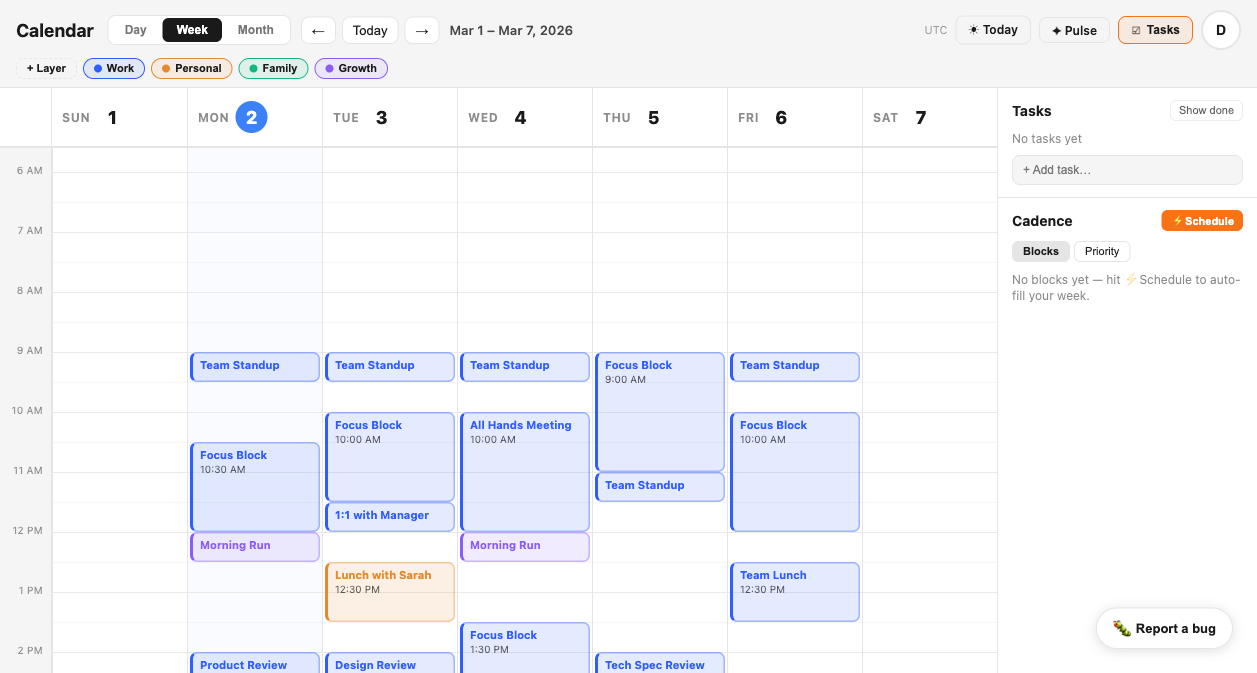
Tempo analyzes the composition of your recruiting week. Separate interviewing from sourcing from admin. Surface the real ratio — reactive versus proactive. Fix the imbalance before you feel the gap in headcount or a missed hiring target.
The calendar is full.
The pipeline is not. Tempo shows you why.
When your calendar is back-to-back with screening calls and panel interviews, sourcing gets pushed to the margins — a half-hour here, a late Friday block there. But the pipeline does not fill itself. The more time you spend on active candidates, the fewer future candidates you are generating. The reactive cycle compounds until the pipeline runs dry.
Post-interview debrief logistics, interview scheduling coordination, ATS updates, feedback requests, offer letter drafting — every piece of admin feels small on its own and together they consume two to three hours of a recruiting day. Without tracking it as a distinct category, it blends into "work" and becomes invisible overhead that you cannot reduce because you cannot see it.
How much of last week was spent on active candidates already in process versus building the pipeline of future candidates? Without layers, that question is impossible to answer from your calendar. You feel busy — you are always on calls — but the ratio of interviewing to sourcing is invisible. Tempo makes it a number you can see every week.
Reactive time and proactive time are not the same work.
Interviewing, sourcing, admin, and relationship-building all land in the same calendar slots — but they produce completely different outcomes. Tempo tracks each separately so the allocation is always visible, the reactive-to-proactive ratio is always measurable, and the imbalances are always correctable before a quarter closes light.
Screening calls, phone interviews, panel interviews, hiring manager syncs. The layer that tends to expand until it crowds everything else out. Tracking it separately is the first step to managing its share of the week.
Boolean searches, LinkedIn sourcing, message drafting, outbound outreach, referral follow-ups. The proactive layer that builds future pipeline. CADENCE protects this time from being consumed by the reactive interviewing load.
Interview scheduling, ATS updates, feedback collection, offer coordination, debrief logistics. Every recruiter has this layer. Almost none of them have ever seen how large it actually is as a percentage of their week.
Talent community events, alumni network, candidate relationship nurturing, hiring manager relationship-building. The long-term pipeline layer that produces the best hires and almost always has the smallest share of the calendar.
What you get that you don't have now.
Standard calendars show you what is scheduled. They do not tell you whether your sourcing time is being systematically consumed by interview load — or what the actual split looks like week over week.
Put your calendar to work.
See the ratio. Fix it. Fill the pipeline.
Connect your calendar in under two minutes. Layers separate interviews from sourcing from admin. SIGNAL alerts when proactive time is disappearing. CADENCE schedules sourcing blocks before the interview load consumes the week. PULSE delivers the real composition of your week — reactive versus proactive, in numbers.